cantigos racistas la noche del 31 de marzo en el Estadio del Español en Cornella del prat en Barcelona
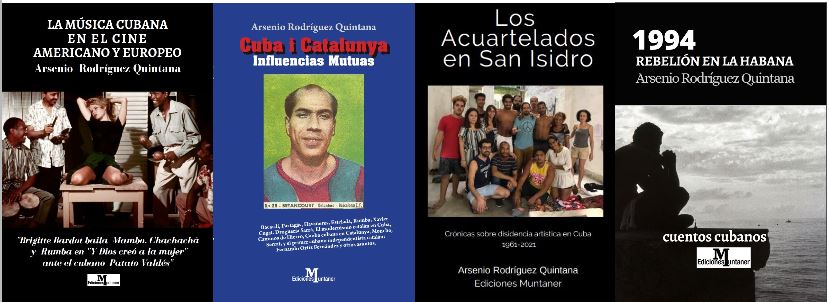
Cabecera con algunos de mis libros. Cuba i Catalunya Influencias Mutuas/El malecón Habanero/Poemas/ Erótika Summa/El Arte del Sabor(...) Dos Siglos de Música Cuba y Cuentos... y más en AMAZON, todos y algún otro sobre Lezama o Síndrome de Ulises.
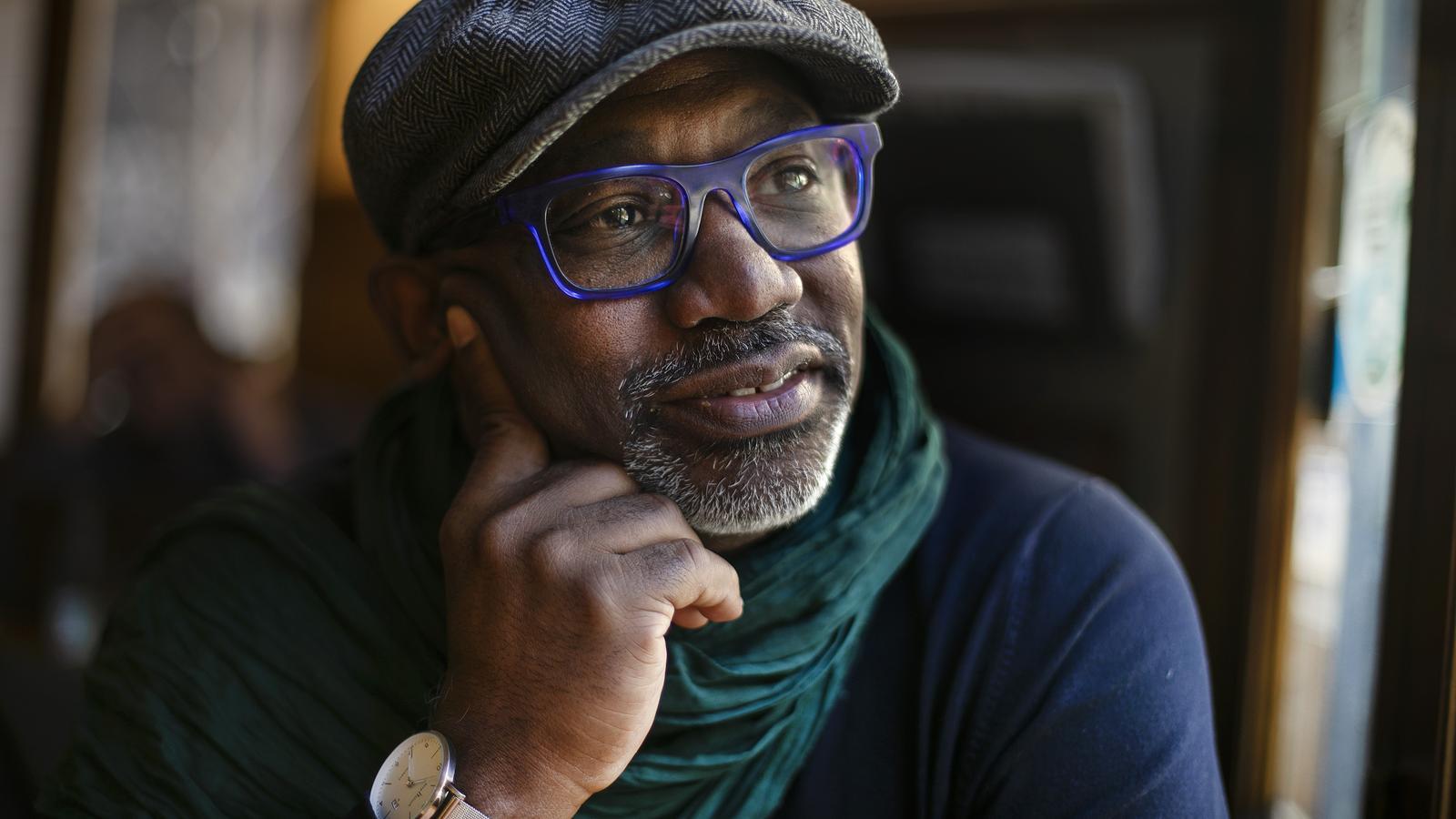
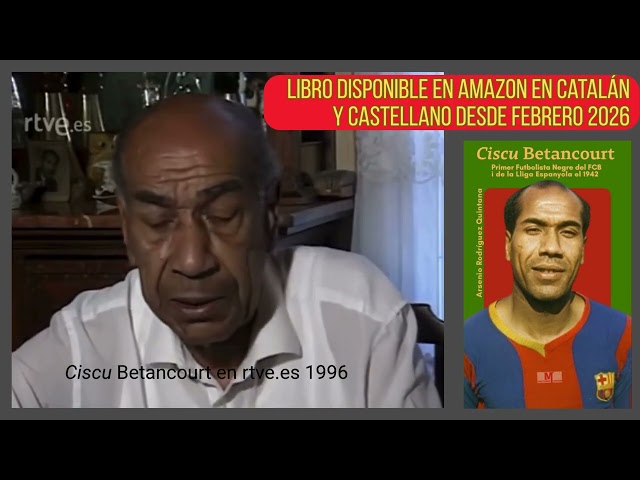
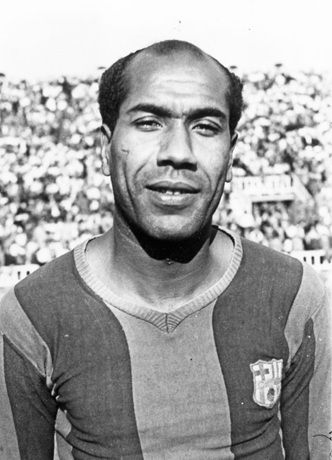
Barcelona“Yo trabajaba en una editorial llamada Linkgua en la calle Muntaner, 45. Hacía de editor y corrector. Y un día en la puerta me encuentro una señora de unos 80 años, la Carme Humet Cocinero. Y me pide si la puedo abrazar porque hace 40 años que no abraza a un negro”, explica Arsenio Rodríguez Quintana (La Habana, 1964). Rodríguez la abrazó y preguntó por qué razón lo había pedido. “Me dijo que su tía, la Maria Cocinero, se había casado con un cubano negro llamado Longinos Betancourt que era portero en un edificio en Urquinaona. Y añadió que el hijo de esta pareja había jugado en el Barça. Me dejó de piedra. No sabía nada, yo que soy cubano, negro y del Barça”, añade.Así comenzó la búsqueda de Rodríguez para dar a conocer la figura de Francesc Siscu Betancourt i Cocinero (1913-1998), el primer jugador negro de la historia del Barça. “Betancourt vino a buscarme. Fue una señal. Desafortunadamente, su familia no tuvo mucho interés en recordar la figura de Siscu y desecharon muchos documentos. Da pena. Así que me ha tocado investigar”, explica Rodríguez, que acaba de publicar un libro para reivindicar a este jugador que defendió la camiseta de un montón de equipos catalanes. Debutó en el Fort Pienc en los años 20 y en 1961 aún estaba vinculado al fútbol en el Sant Cugat, donde entrenaba. Por medio, buenas épocas en el Barça, el Sabadell o el Badalona, y llegó a marcarle un gol al Real Madrid.
“Lees que el primer jugador negro de la liga fue Larbi Ben Barek en 1948 con el Atlètic de Madrid. O que el primer jugador negro del Barça llegó en los años 60. Y no se habla de Betancourt. A veces hay gente que dice que los barceloneses no habían visto un negro hasta que en los años 40 llegó a la ciudad Antonio Machín, cuando Betancourt ya llevaba años jugando, entonces”.
Pero, ¿quién era Siscu Betancourt? El padre era cubano y la madre era de l'Arboç, en el Penedès. Nació hace ahora 113 años, el 28 de marzo de 1913 en el Eixample de Barcelona, en concreto en la calle Ausiàs March, 46. Los primeros goles los metió en el portal del edificio donde vivía, un bloque de pisos modernista conocido como la Casa Antònia Burés. El padre había llegado muy joven a Cataluña y, de hecho, un periodista que fue a entrevistar al Siscu de joven recordaba que en casa de los Betancourt se leía L'Instant, un diario catalanista. Del Fort Pienc pasó al Gràcia, el Badalona y el Sabadell, donde compaginaba el fútbol con un trabajo en un negocio de telas. En el Barça jugó del 1941 al 1944, ya después de superar unos años duros, porque fue multado por las autoridades franquistas porque durante la guerra se implicó en el sindicato de profesionales del fútbol y llegó a formar parte de la directiva que impulsó la organización de la Liga del Mediterráneo, un torneo disputado la temporada 1937, durante el conflicto.“Era un hombre que amaba tanto jugar al fútbol que en los años 30 llegó a rechazar un contrato con el Barça porque no le podían garantizar jugar cada domingo. Así que rompió el contrato y se fue a Badalona
Después jugó en el Constancia de Inca y en el Girona, entre otros. También con la selección catalana. Una vez retirado compaginó su ocupación laboral en fábricas textiles con la dirección de diversos equipos de las categorías inferiores catalanas. Y se implicó con la Agrupación de Veteranos del Barça, con la que jugó muchos partidos. Era un hombre con pasión por bailar. Él decía que era cosa de la sangre cubana, pero no se perdía un baile. Y con gran sentido del humor. En un viaje en tren, vio a dos chicas que le miraban fascinadas porque seguramente no habían visto nunca un negro. “Se levantó y les dijo que si le tocaban la piel... ¡no destiñía!”, explica Rodríguez, que tiene un sueño aún por cumplir: que la situación en Cuba pueda cambiar para poder volver a su tierra natal y hablar a los barcelonistas de la isla sobre quién era Siscu Betancourt.“Cuba y Cataluña estamos unidos. Yo me hice culé el año 2001, con la chilenita de Rivaldo. Y no sabía nada de él, entonces. Con el tiempo he ido investigando las relaciones entre Cuba y Cataluña. Muchas zonas de La Habana son similares a Barcelona, las murallas fueron derribadas en años similares, tenemos un barrio similar al Ensanche... He ido explorando las conexiones, como un presidente del Barça nacido en Cuba, Rafael Llopart. Y la figura de Betancourt lo explica todo”, razona, antes de añadir que “los pilares de la economía cubana hoy en día, el azúcar y el tabaco, fueron cosa de catalanes, como los puros Partagás”, cosa de un empresario de Arenys de Mar. “Se habla demasiado de los catalanes esclavistas, que existieron, y poco de las cosas positivas que tenemos en común. Hay que hablar más de gente como Betancourt”, concluye.


Barcelona"I used to work in a publishing house called Linkgua at 45 Muntaner street. I was an editor and proofreader. And one day at the door I meet a lady about 80 years old, Carme Humet Cocinero. And she asks me if I can hug her because she hasn't hugged a black person in 40 years," explains Arsenio Rodríguez Quintana (Havana, 1964). Rodríguez hugged her and asked why she had asked. "She told me that her aunt, Maria Cocinero, had married a black Cuban named Longinos Betancourt who was a doorman in a building in Urquinaona. And she added that the son of this couple had played for Barça. It blew my mind. I knew nothing, and I'm Cuban, black, and a Barça fan," he adds. "Thus began Rodríguez's investigation to publicize the figure of Francesc SiscuBetancourt y Cocinero (1913-1998), the first black player in Barça's history. "Betancourt came to find me. It was a sign. Unfortunately, his family wasn't very interested in remembering Siscu's figureand they threw away many documents. I'm very sorry. So I had to investigate," explains Rodríguez, who has just published a book to vindicate this player who defended the jersey of a lot of Catalan teams. He debuted at Fort Pienc in the 20s and in 1961 he was still linked to football at Sant Cugat, where he coached. In between, good spells at Barça, Sabadell or Badalona, even scoring a goal against Real Madrid with the blaugrana jersey.
"You read that the first black player in the league was Larbi Ben Barek in 1948 with Atlético de Madrid. Or that the first black player for Barça arrived in the 60s. And Betancourt is not mentioned. Sometimes people say that Barcelonians hadn't seen a black person until Antonio Machín arrived in the city in the 40s, when Betancourt had already been playing for years, then".
But who was Siscu Betancourt? His father was Cuban and his mother was from l’Arboç del Penedès. Born 113 years ago on March 28, 1913 in Barcelona's Eixample, specifically at 46 Ausiàs March street. He scored his first goals in the doorway of the building where he lived, a modernist apartment block known as Casa Antònia Burés. His father had arrived in Catalonia at a very young age and, in fact, a journalist who interviewed Siscu when he was young recalled that L'Instant, a Catalanist newspaper, was read at the Betancourt home. From Fort Pienc, he would move to Gràcia, Badalona, and Sabadell, where he juggled football with a job in a fabric business. He played for Barça from 1941 to 1944, after overcoming some difficult years because he was fined by the Francoist authorities, as during the war he became involved in the professional football union and was part of the board that promoted the organization of the Mediterranean League, a tournament played in the 1937 season, during the conflict."He was a man who loved playing football so much that in the 1930s he even turned down a contract with Barça because they couldn't guarantee him playing every Sunday. So he broke the contract and went to Badalona, where they did let him play," says Arsenio. He arrived at Barça at 29 years old. It was a club that was struggling in the post-war period. And he became very popular with the public, especially for his good humor, laughter, and his flair for spectacular plays. Years later, he would recall in an interview: “I would have paid to play for Barcelona! We were a group of friends and although not all of us were Catalan, everyone there spoke Catalan, even Bravo,” referring to a striker from Ceuta. He played 14 official matches, scoring three goals. But he would score even more goals in friendlies. One of them was in Chamartín against Madrid, in 1943, in a tournament known as "the reconciliation cup." In the previous season, Madrid had beaten Barça 11-1 in the Cup in one of the most controversial matches of all time, leading to the resignation of the Barça president and the breakdown of relations between the clubs. To make peace, this reconciliation cup was organized, which Barça won with a draw in Madrid and a resounding victory at Les Corts.
Later he would play for Constancia de Inca or Girona, among others. Also with the Catalan national team. Once retired, he combined his work in textile factories with managing various teams in the Catalan lower divisions. He also got involved with the Barça Veterans Association, playing many matches. He was a man with a passion for dancing. He used to say it was a matter of his Cuban blood, but he never missed a dance. And he had a great sense of humor. On a train journey, he saw two girls looking at him, fascinated, because they had probably never seen a black person before. "He stood up and told them that if they touched his skin... it wouldn't come off!", explains Rodríguez, who still has one dream to fulfill: that the situation in Cuba can change so he can return to his homeland and tell Barça fans on the island about who SiscuBetancourt was. "Cuba and Catalonia are united. I became a Barça fan in 2001, with Rivaldo's bicycle kick. And I knew nothing about him back then. Over time, I've been researching the connections between Cuba and Catalonia. Many areas of Havana are similar to Barcelona, the walls were torn down in similar years, we have a neighborhood similar to the Eixample... Seeing so many elderly people dancing sardana reminds me of my mother doing Tai Chi in Havana, as we had thousands of Chinese in Cuba who left us this tradition. I've been exploring the connections, like a Barça president born in Cuba, Rafael Llopart. And Betancourt's figure explains it all," he reasons, adding that "the pillars of the Cuban economy today, sugar and tobacco, were the work of Catalans, like Partagás cigars," the work of a businessman from Arenys de Mar. "There's too much talk about the Catalan slave owners, who existed, and too little about the positive things we have in common. We need to talk more about people like Betancourt," he concludes.